
|
Getting your Trinity Audio player ready...
|
What happened
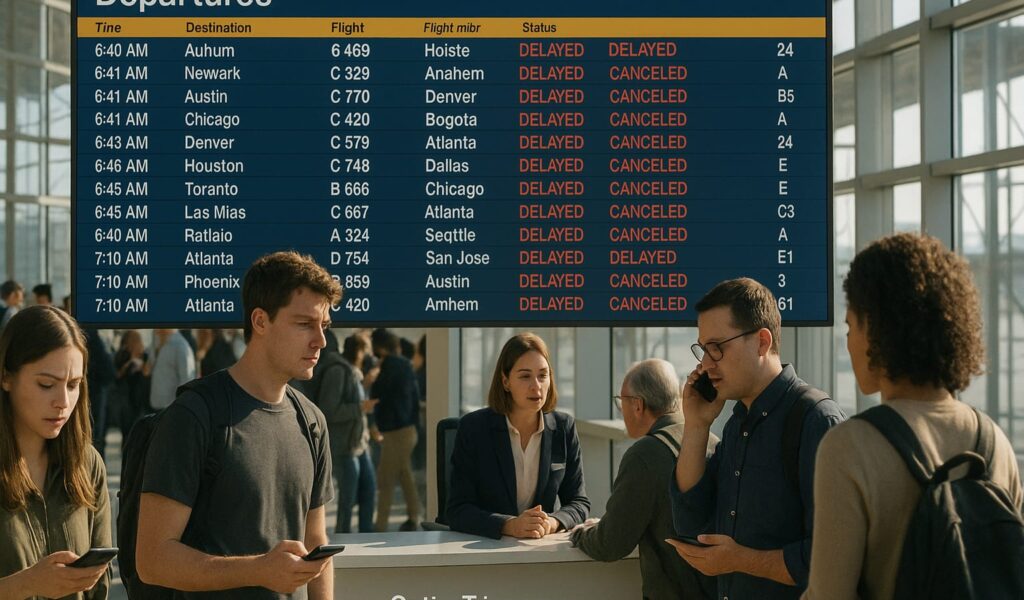
According to a report published Oct. 2, more than 1,670 U.S. flights were delayed and 140 were canceled during a widespread travel disruption. Authorities attributed the disruption to a combination of Federal Aviation Administration actions and weather-related operational limits.
Why travelers should care
Delays and cancellations at this scale can ripple through itineraries: connections may be missed, arrival times pushed back by hours, and peak-day airport congestion increased. Passengers with tight layovers or time-sensitive plans are especially vulnerable.
Who may be affected
Travelers on domestic U.S. routes during the disruption window faced the highest risk, including business travelers, families traveling for holidays, and those with same-day connections. Airlines and airports may still be adjusting schedules, so impacts can vary by carrier and location.
What to check next
Passengers should confirm the status of their specific flights directly with their airline and monitor airport advisories. Check for rebooking options, arrival/departure board updates, and any FAA notices that may affect operations. If your trip is time-sensitive, consider earlier alternatives or flexible rebooking where available.
Practical tips
Arrive earlier than usual if you must travel, keep travel documents and essentials in carry-on luggage in case of delays, and document expenses if you plan to seek reimbursements. Travelers with nonrefundable plans should review airline policies and travel insurance coverage.
What to do next: Search flights on OptionTrip.
OptionTrip is your personal travel partner for planning, comparing and organizing your journey.
Reporting reviewed from: NJ.com.